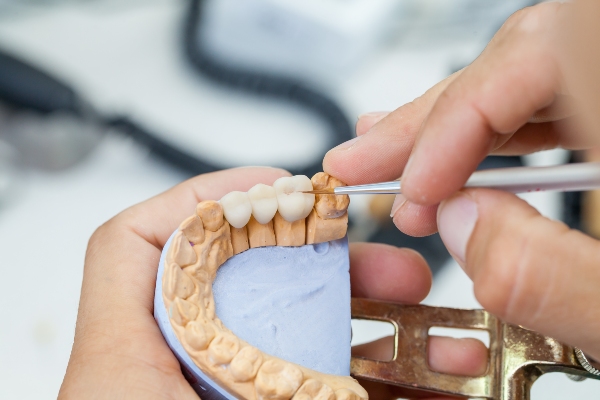
When the smile is missing a tooth or three, a general dentist may recommend dental bridges to restore its appearance and functionality. Even a single missing tooth can cause difficulties with eating and speaking. It also leaves room for the remaining teeth to shift, leading to a misaligned bite. While traditional and implant-supported dental bridges can help prevent these issues and more, there are key differences between the two that affect which one a dentist would recommend for your needs.
What are dental bridges?
Dental bridges are a type of tooth replacement that uses a supportive framework to hold a false tooth in place. Two components, the pontic and abutments, work together to create the bridge.
The pontic is the false tooth itself. It will fill in the gap left by a missing tooth, delivering a seamless, natural-looking restoration. The abutments are the teeth or implants that sit on either side of the gap and secure the pontic in place with dental crowns or metal wings. In other words, the abutments are anchors. They are also what determines the type of bridge.
Traditional dental bridges
With traditional dental bridges, the abutments are natural teeth with dental crowns on top. Oral surgery is not required for traditional bridge placement. Rather, the dentist will need to shape the natural teeth on either side of the space where the tooth is missing so that they can cement a crown on top of each.
Traditional bridges are best for replacing a single missing tooth. In addition, the patient will need to have abutment teeth that are sturdy enough to support the pontic. Further, since crowns anchor the false tooth, they are typically used to replace teeth that are missing anywhere in the mouth except for the very front.
An alternative option: Implant-supported bridges
Implant-supported dental bridges can replace three missing teeth in a row. A dental professional will place two dental implants on either side of the gap, which act as abutments to support a pontic that fills the remaining gap in the middle. Similar to bridges that use natural teeth, dental crowns will be placed on the implants to anchor the pontic.
To receive dental implants, a patient will need to undergo oral surgery. These screwlike posts are inserted into the jawbone. Then, as the patient heals, the implants fuse with the jawbone in a process known as osseointegration. Once this stage is complete, the rest of the dental bridge can be placed. Note that the osseointegration stage could take several months. The patient may also need a dental bone graft if they have experienced jawbone loss.
The bottom line
There is no real answer to whether traditional or implant-supported dental bridges are better. It wholly depends on the patient’s dental condition. A dentist will likely recommend a traditional bridge if only a single tooth is missing. If three are missing and the jawbone is healthy enough to support implants, consider implant-supported bridges for the job.
Discover which option is right for you
Missing teeth can cause issues beyond the aesthetic, affecting how your smile functions and how the teeth fit together. Fortunately, a dental bridge may restore the smile. A general dentist can answer your questions about traditional bridges, implant-supported bridges, and more in an appointment.
Request an appointment or call Hermann Park Smiles at 713-522-1717 for an appointment in our Houston office.
Related Posts
Losing a tooth can affect your appearance and oral health, causing misalignment, bone loss, and changes to your facial structure. Dental bridges are a popular tooth replacement option for people with one or more missing teeth. They offer a way to restore your smile and oral function.A dental bridge is a fixed prosthetic device that…
No one has to live with a gap in their smile due to missing teeth when a dental bridge offers a versatile and effective solution. It is also important to remember that replacing missing teeth is more than just a matter of cosmetics. Here is why bridging that gap teeth is important and how a…
Dental bridges and dental crowns are wonderful, durable options to restore a smile. However, they are both employed for different reasons. By understanding the specifics of both, patients can learn which option is best for their needs when consulting with a dentist.Dental bridges are recommended after a tooth extraction, whether by trauma or professional intervention.…